We have updated the company pages to reflect a change to the core team.
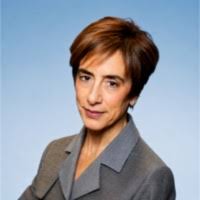
Angeliki Kotsianti has joined PharmaFlow as Consultant in Medical Governance and Regulatory Strategy. She is a physician-scientist and molecular pathologist, and for nineteen of her three decades in medicine and science she was at Pfizer, where she chaired benefit-risk and where the final medical judgement on the company’s medicines rested with her.
That authority extended to manufacturing, reformulation, recall and supply. It is an unusual vantage point, and it produced an unusual observation: in an industry striving for resilience, the decisions that determine whether a medicine reaches a patient are taken long before anyone is watching.
Readers of this site will recognise the argument. PharmaFlow has spent years making the case that supply resilience is designed in during development, not inspected in afterwards, and that treating nonclinical development and CMC as regulatory hurdles rather than as the design phase they are is what causes programmes to stall and supply to fail. What is new is hearing it from someone who held the medical decision authority inside a company of that size, and who reached the same conclusion from the opposite direction.
Dr Kotsianti (Angeliki) expresses an underpinning principle at PharmaFlow, in her own words:
“The patient comes first, and in my experience that safeguards the enterprise as reliably as it safeguards the patient. Those are not competing objectives, though they are often managed as though they were.”
Angeliki’s work on supply resilience is substantial. She built Pfizer’s global Medically Necessary Products strategy. When the pandemic overwhelmed hospitals, she created the medical list that classified every product by necessity. She co-led Pfizer’s representation in the EU Critical Medicines Alliance, whose work informed the Critical Medicines Act. She also directed the medical strategy when regulators mandated action on carcinogenic impurities, and her conclusion there was that the failure was rarely scientific.
Her specialist interest is the governance of evidence, and increasingly how AI-derived findings are validated and defended. She was building machine-learning models for oncology outcomes prediction long before AI in medicine had a name, work that returned a withdrawn lung-cancer therapy to patients through a companion diagnostic. She is an inventor on eight patents in machine-learning diagnostics for oncology, and co-founder of Oncolyze Inc., developing oncolytic therapy for leukaemia.
She joins Hedley Rees and Gareth Morris-Stiff on the core team.